
Designing with and for adolescents to improve health services at scale
Project type: Product strategy
My role: Design Lead
Additional team members: Design Director, Human-Centered Designers (2), Visual Communication Designer, Community Engagement Specialist
Timeline: 2 years
Young people ages 16-24 experience a disproportionate burden of negative sexual health outcomes. At the same time healthcare providers are not trained to deliver quality adolescent healthcare. Our team was tasked with creating products and/or services that could scale across Chicagoland to improve adolescent sexual health outcomes.
Using a research-led design approach, our team launched a “Hello Greenlight,” a health service platform co-designed with and for young people.
Exploring with Young People
Participatory Design: We started this effort through a series of five participatory design workshops with young people. The curriculum of these workshops used several frameworks alongside design thinking practice, including positive youth development and reproductive justice framework. These kept us grounded in young people’s lives and the history of inequitable access that young people confront.
We kept activities at the forefront of these workshops based around the design process rather than introduce the design process with activities following. Immediate interaction with materials and prompts created a more engaging atmosphere. A participant noted how they appreciated this approach, because it felt like they were discovering a process, rather than being taught. It gave them more ownership, which we strived to do as part of our youth development framework.
The range of activities covered in these workshops, from making play-doh avatars to exploring the mobile health unit, to play-acting, lay the groundwork for rich idea exploration. At the end of the series, young people presented their ideas and low-fidelity prototypes.


Centering young people through principles
Our team analyzed the content and discussions from the workshops to craft core Design Principles and hone a sexual and reproductive health care high-level journey for young people.
- Make sexual and reproductive healthcare-related rights known and actionable.
- Clarify and help young people navigate pathways across the system of sexual healthcare.
- Set expectations for what young people should expect for quality sexual healthcare before, during, and after a visit.
- Ensure that care delivery is inclusive, respectful, and supportive of patient choice.
- Support young people’s confidence and problem solving efficacy for their sexual and reproductive health.
- Provide young people with the space to have positive and constructive dialogues with other peers about sexual health, and to support each other in caring for their sexual health.
- Equip adult allies with the tools and knowledge to support young people as they explore their sexual health.
How we applied learnings: These principles served as a continual anchor and criteria to vet our ideas against.

Idea generation & Vetting
Brainstorms: To build upon what young people created, each of these principles became a “How Might We” prompt to generate ideas across a range of stakeholders, including healthcare and public health professionals, and Chicago Department of Public Health.
Over 100+ ideas, along with the ones that young people created, were then vetted against our youth advisory council and provider advisory council — both groups that we formed as a way to keep us grounded in the needs of these key audiences.
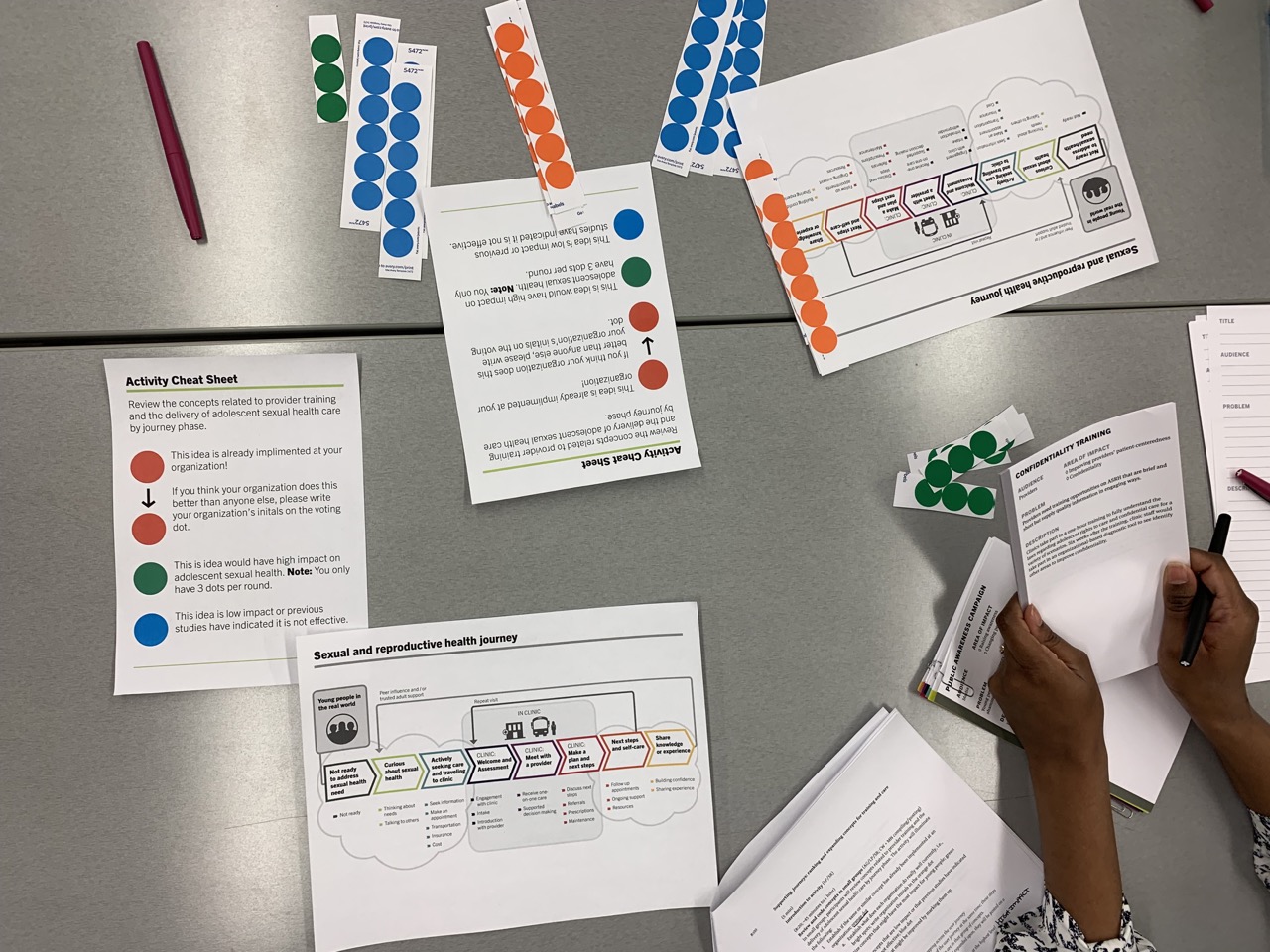
They were vetted through a series of workshops where ideas and prototypes were discussed and rated across criteria that gauged 1) how valuable the solutions was 2)how different it was from existing solutions, and 3) ease of implementation.
What we learned: Several of the most voted-upon and promising ideas centered on changing the hierarchy of conversation around sexual health with young people. That hierarchy includes the unequal power relationship between a provider and a patient, or a parent with their child.



Landscape analysis
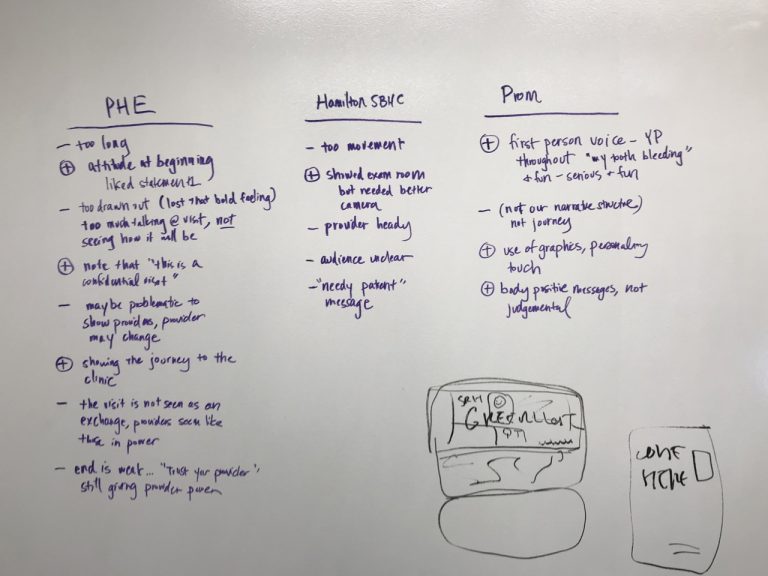
Analysis: We drew inspiration from Keeley’s “10 types of innovation” to see our differentiating position.
What we learned: A landscape analysis revealed that our emphasis on youth voice and our skillset in making things could differentiate us from other adolescent health focused organizations. “Hello Greenlight” was a unique offering as a human-centered design based public health intervention.
How we applied learnings: We decided to emphasize youth voice in our products by creating a brand, Hello Greenlight. Young people took an active role in creating the direction of the brand.Hello Greenlight was a unique offering as a human-centered design based public health intervention.
Product Roadmap
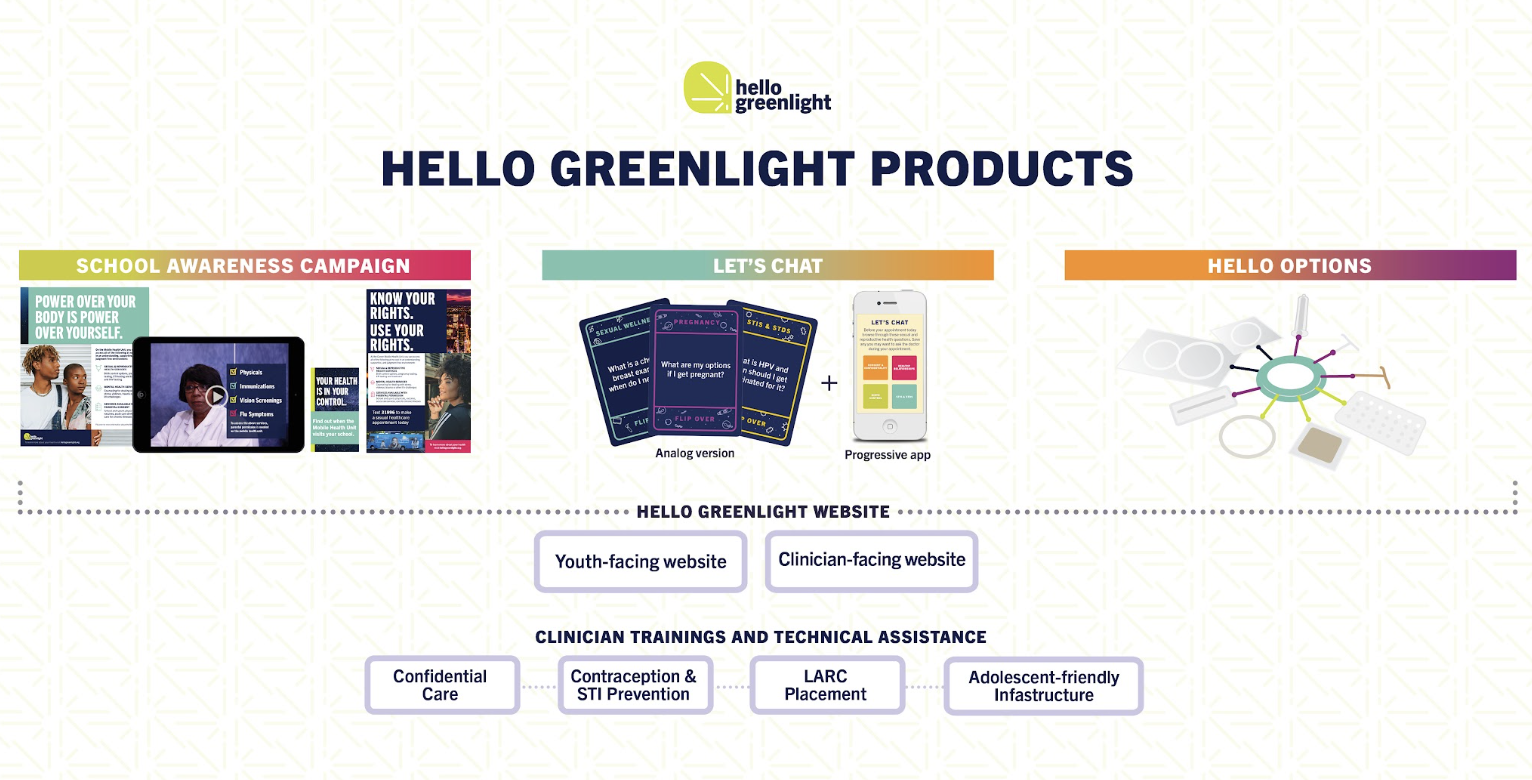
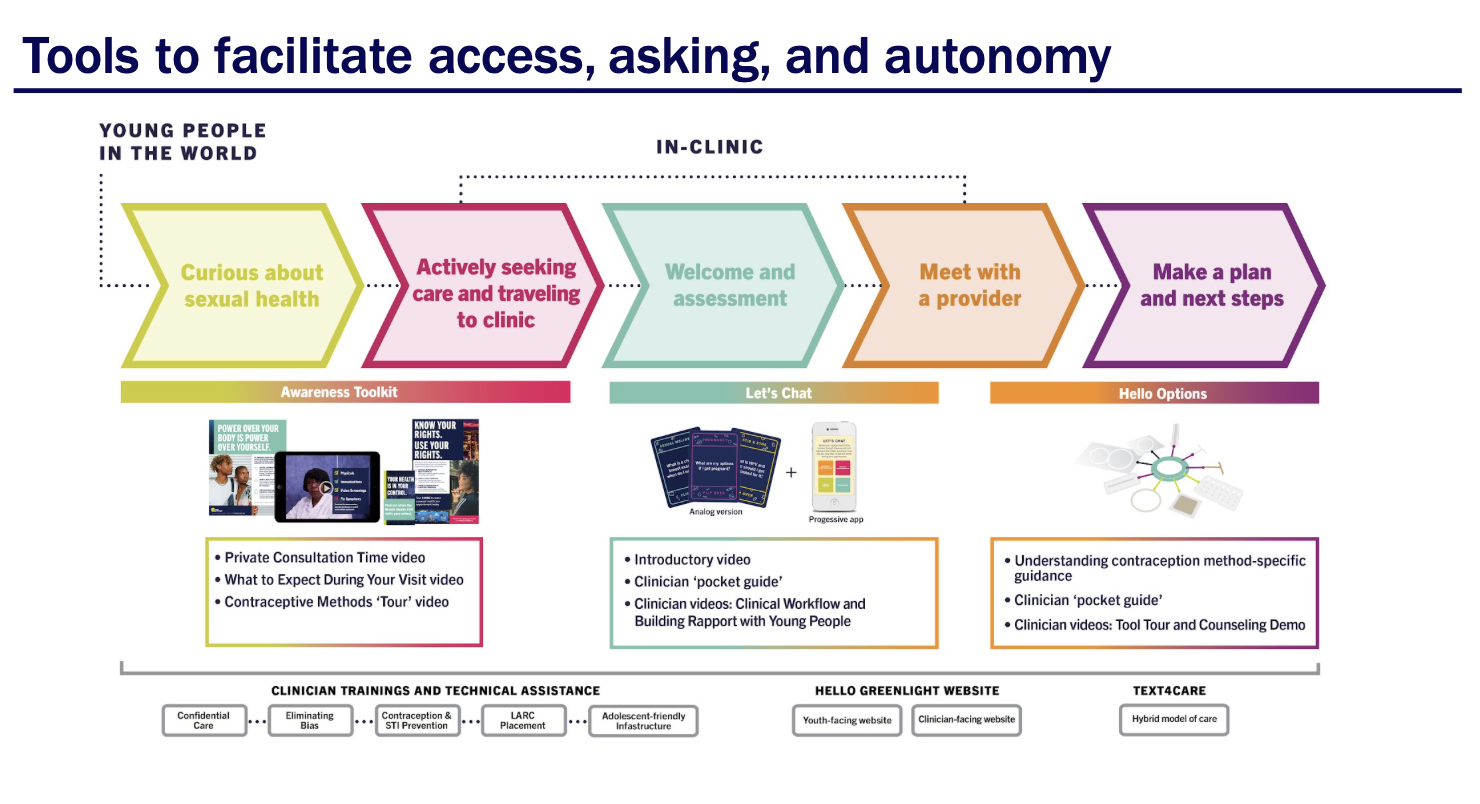
From all of the information gathered across the ecosystem of sexual and reproductive healthcare, we formalized our roadmap. We identified the products that Hello Greenlight could uniquely offer to center young people in a typically medical and provider-centered environment. Tools like “Hello options” and “Let’s Chat” enable young people to start and guide the conversation about their health.
These tools supported key phases in a young person’s healthcare journey. Along with provider training, they support a quality sexual and reproductive healthcare service.
Outcomes
The first young-people facing products created were awareness materials on how to access contraceptive services, which we knew from research to be low and often stigmatizing. We designed Hello Greenlight materials with young people, and the brand reflects a strong, powerful voice that dignifies sexual health and self-health.
The first provider-facing product we created was a contraceptive counseling tool, Hello Options, holds physical life-size replications of the most widely available contraceptive options. It was shown to improve provider counseling and increase patient knowledge of options in the 2021 article “Provider and Patient Perspectives on a New Tangible Decision Aid Tool to Support Patient-Centered Contraceptive Counseling with Adolescents and Young Adults” featured in the Journal of Pediatric and Adolescent Gynecology. As of 2020, it prepares for mass production after a successful initial trial with a children’s hospital.
OUTPUTS
Design Principles
Product roadmap
Brand
Awareness materials
Youth and healthcare provide advisory councils