
Adolescent Health Services on Mobile Health Units
Project type: Service design
My role: Design Lead and primary relationship manager
Additional team members: Director, Communication Designer, Project Manager
Timeline: 2 years
Adolescents, especially those living in underinvested neighborhoods, face many barriers to accessing sexual health services – from not being able to visit during open hours to stigma associated with sexual health. Mobile health units present an opportunity to provide these services, but they had to prove that this was a viable option to funders and stakeholders.
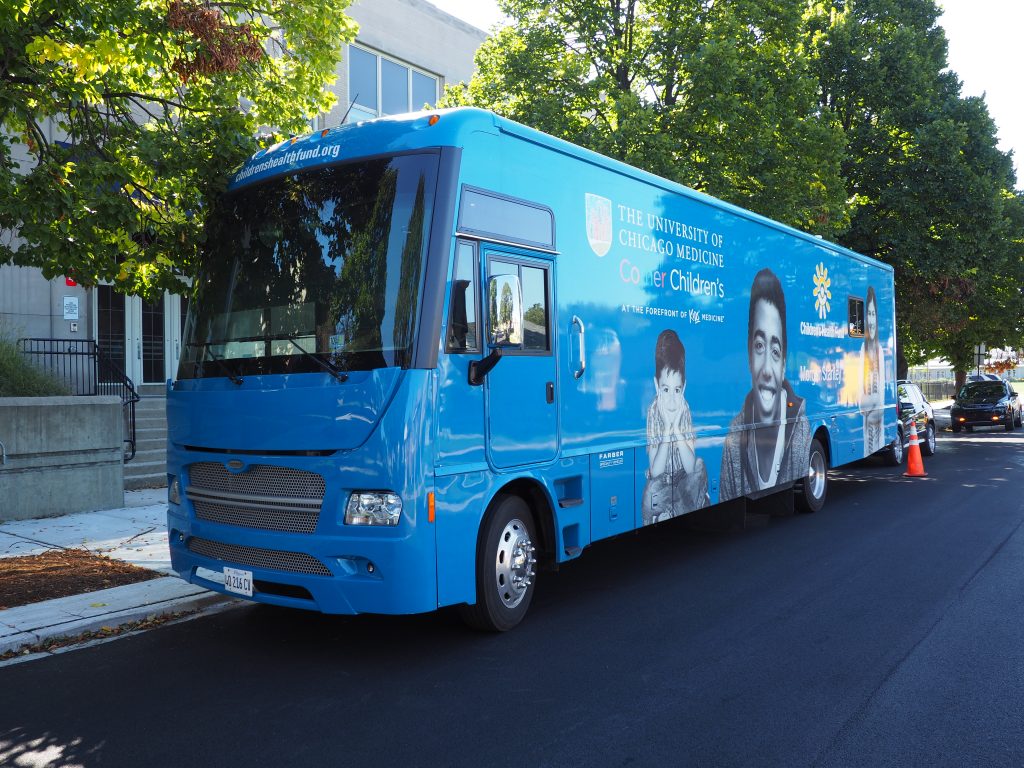
We partnered with two Mobile Health Units in the South and West sides of Chicago that were passionate to increase access to adolescent sexual and reproductive health.
We uptrained mobile health unit providers and created a toolkit to scale reproductive health services nationwide.
Understanding Context
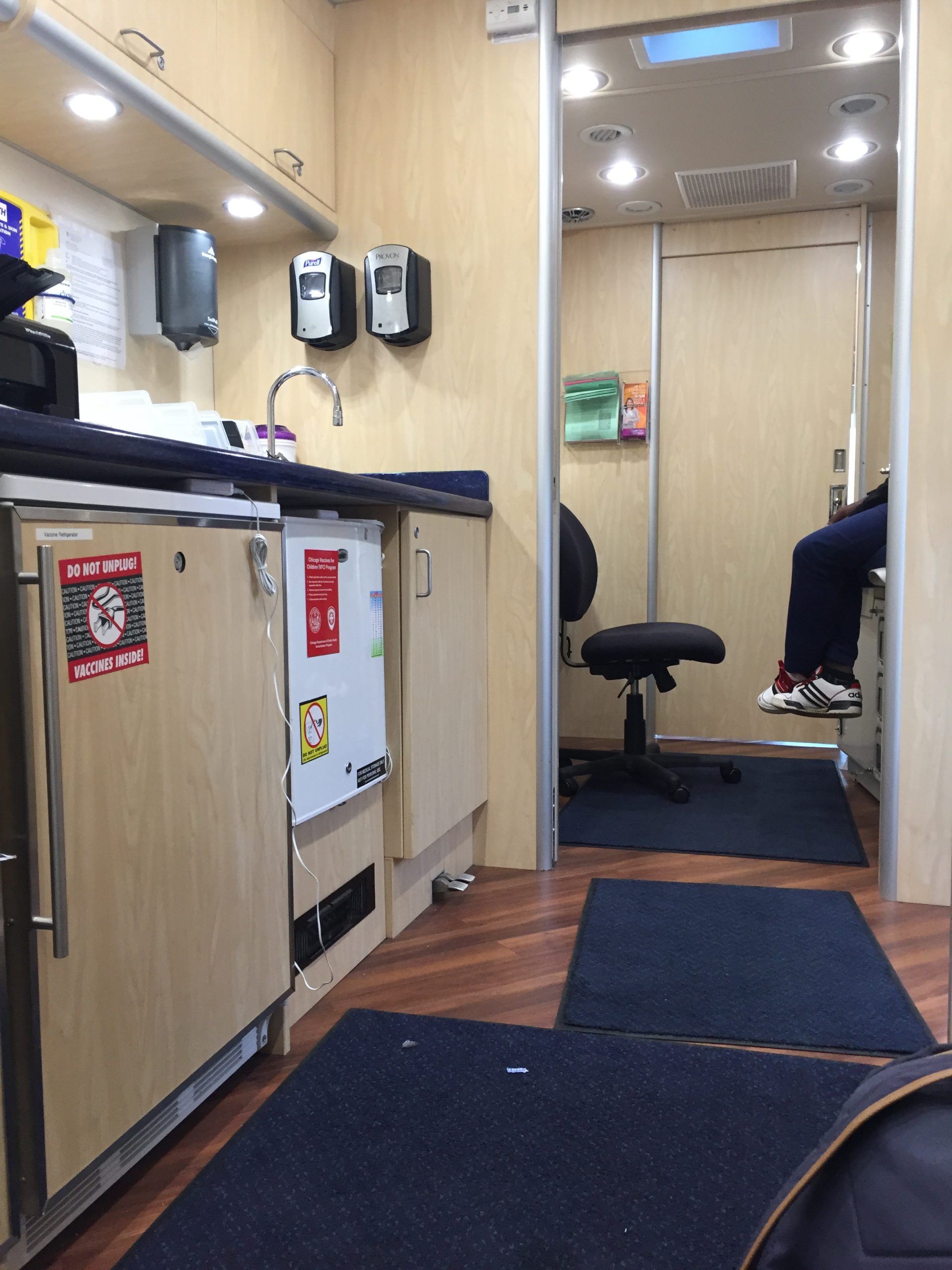
Listening and observing: To start, we observed services for 5 days at several different school locations. I observed both in the exam room and waiting area with patients and providers’ permission. As I watched individuals have health visits with the mobile health unit provider, I saw the visits range from routine physical exams to sensitive conversations about sexual health history. The limitations of space and variation in counseling became more clear, as well as the need to coordinate with school counselors for health visits.
What we learned: Schools approached securing student privacy differently when it came to coordinating visits with the health units. Secondly while in the unit, privacy was very hard to secure within a small waiting room section. We also learned from providers, that while mobile units were a critical node to accessing care, they could not be a young person’s health home. There was a need to better track follow-up care.
How we applied learnings: These observations were foundational to how we could improve the service, and they informed conversations with experts and our service blueprint. Later on, we provided mobile health units with tablets and privacy screens for patients to answer pre-visit questions electronically and maintain confidentiality in a small space.
Data quality and collection
Optimizing the intake: As one of the first design outputs, we drafted a Quality Improvement tool referred to as the Visit Summary form that included patient background information, counseling received and follow-up care needs. This form was created to improve data gathering, as we had very little information on who was visiting the unit and their interests. It was also created as a professional development tool: it listed all the contraceptive options adolescents should be aware of and reminded providers to ask key questions and ways to ask them (i.e. “Do you regularly have sex?” is open to misinterpretation vs. “When did you last have sex?”. “Sex” also requires more explanation)
We reviewed this tool with experts we spoke with as well as with city public health officials. Providers used this form as a way to make sure that students — regardless of gender and sexual orientation — received counseling on all contraceptive options. After several months of use, we iterated on this form again based on provider feedback.
What we learned: From the data we did notice biases, such as contraceptive counseling offered more frequently to female-identified rather than male-identified. We also learned that one of our providers was practicing abstinence-only counseling for younger students, because she believed that to be following latest school regulations.
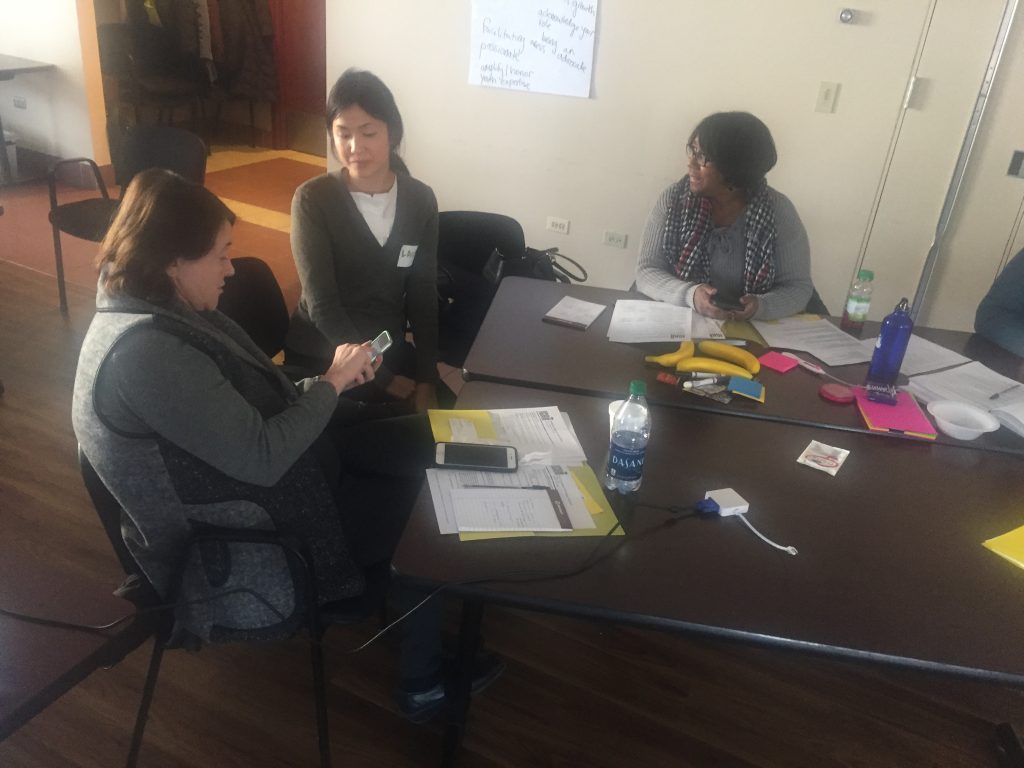
What we did: We developed an adolescent-centered training for mobile health unit providers and school-based health center providers. As part of that training, we invited ICAH (Illinois Caucus for Adolescent Health) to present as well as create scenarios, and interactive exercises.
Formalizing quality service
Given all that we learned and experienced from interviews and observations, we wanted to formalize and map the service, to offer as a toolkit for other mobile health units and as a continual anchor for our own work.
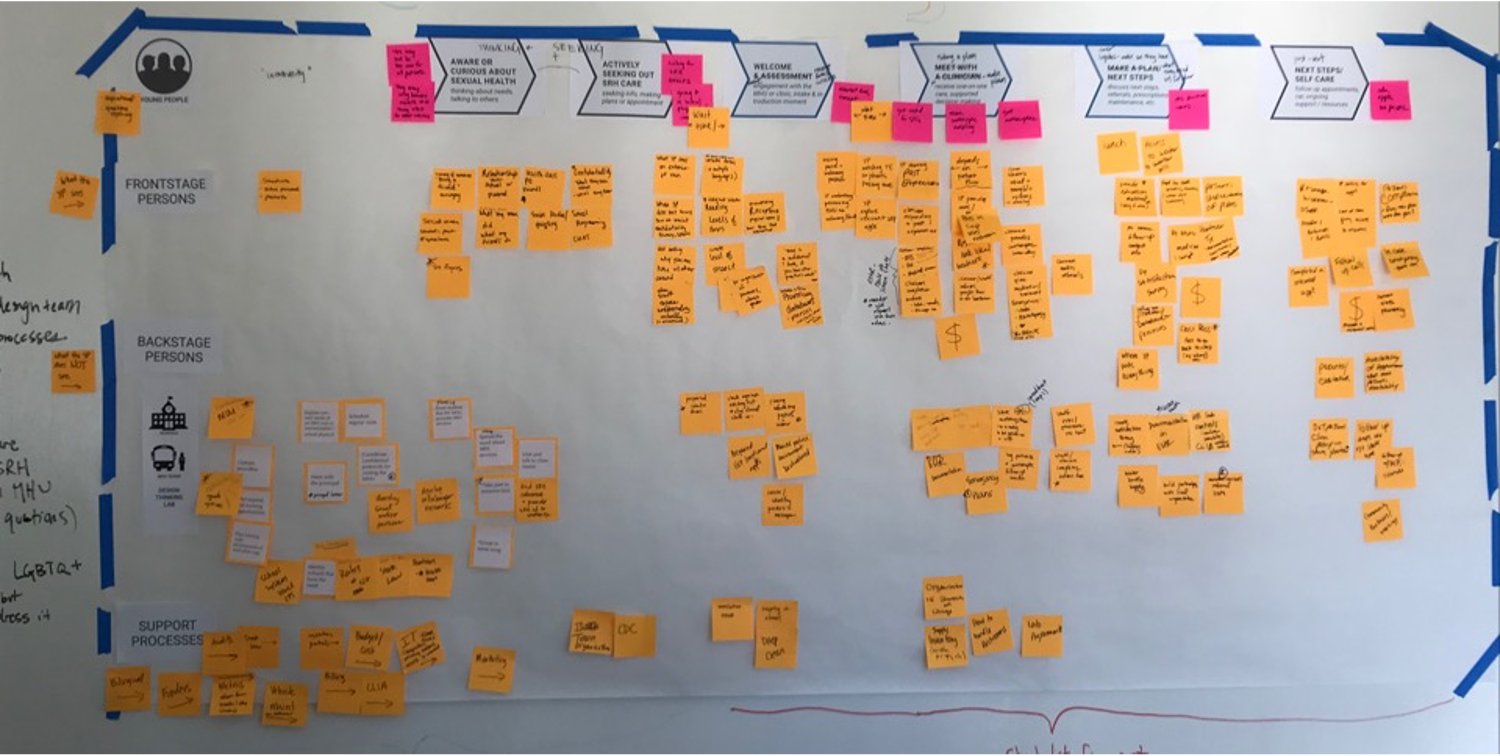
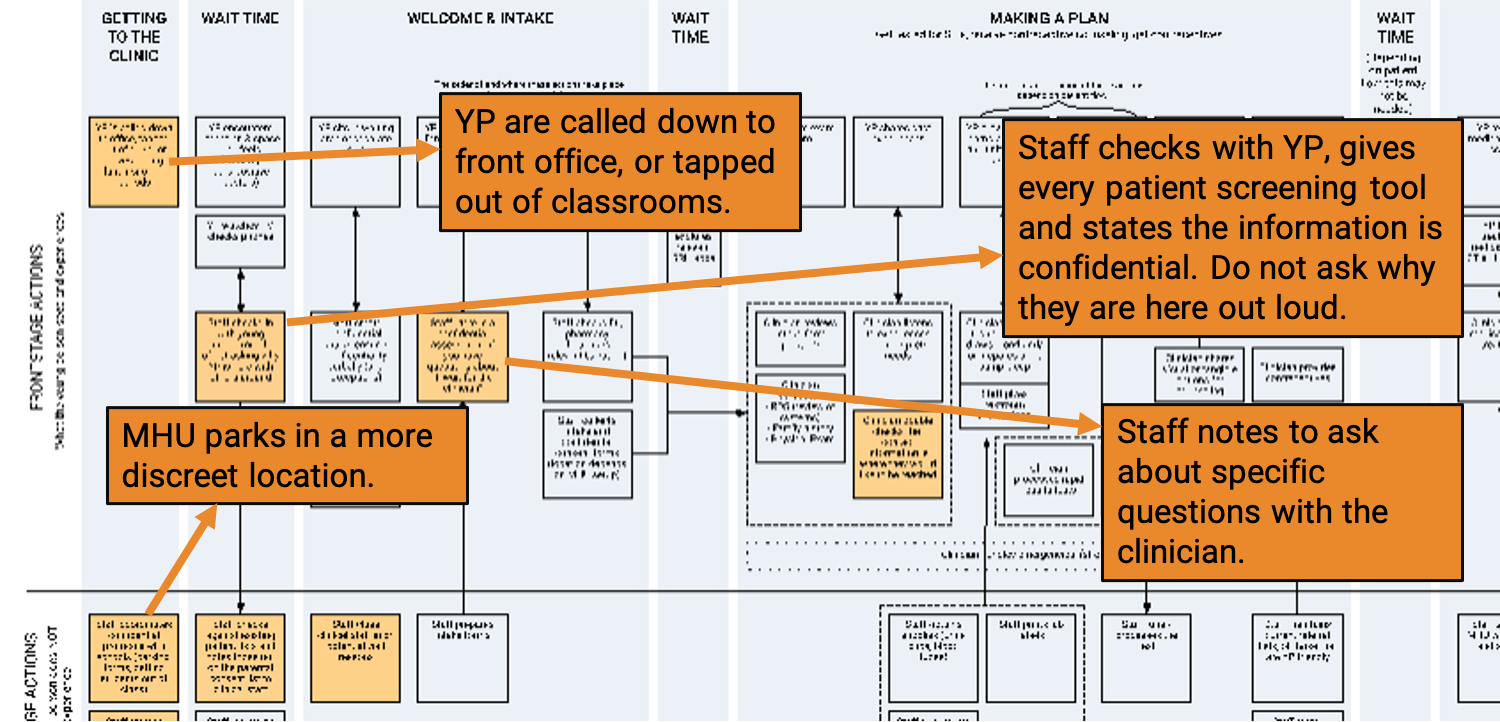
Service Blueprint: We held two workshops with the mobile health unit providers to create a service blueprint that specifically highlighted actions necessary for 1) privacy and confidentiality 2) follow-up care. We noted what otherwise would be taken for granted, like parking beside a side entrance instead of the main door, or practicing what a provider says when calling the young person’s home for test results.
What we learned: The service blueprinting and data gathering demonstrated needs for 1) infrastructure and service optimization to secure privacy 2) quality adolescent-centered training for providers 3) mapping nearby brick and mortar clinics that could serve adolescent health needs to refer patients to.
What we did: We presented the blueprint, along with the Quality Improvement Tool and standardized consent forms at the National Mobile Health Unit conference as a toolkit for how to approach adolescent healthcare.
Outcomes
By the tail end of these initiatives in 2018-2019, counseling increased by 27% YoY, and intake of contraceptives increased by 15% YoY. The continual offshoots of initiatives and success of the service sustained funding for several years.
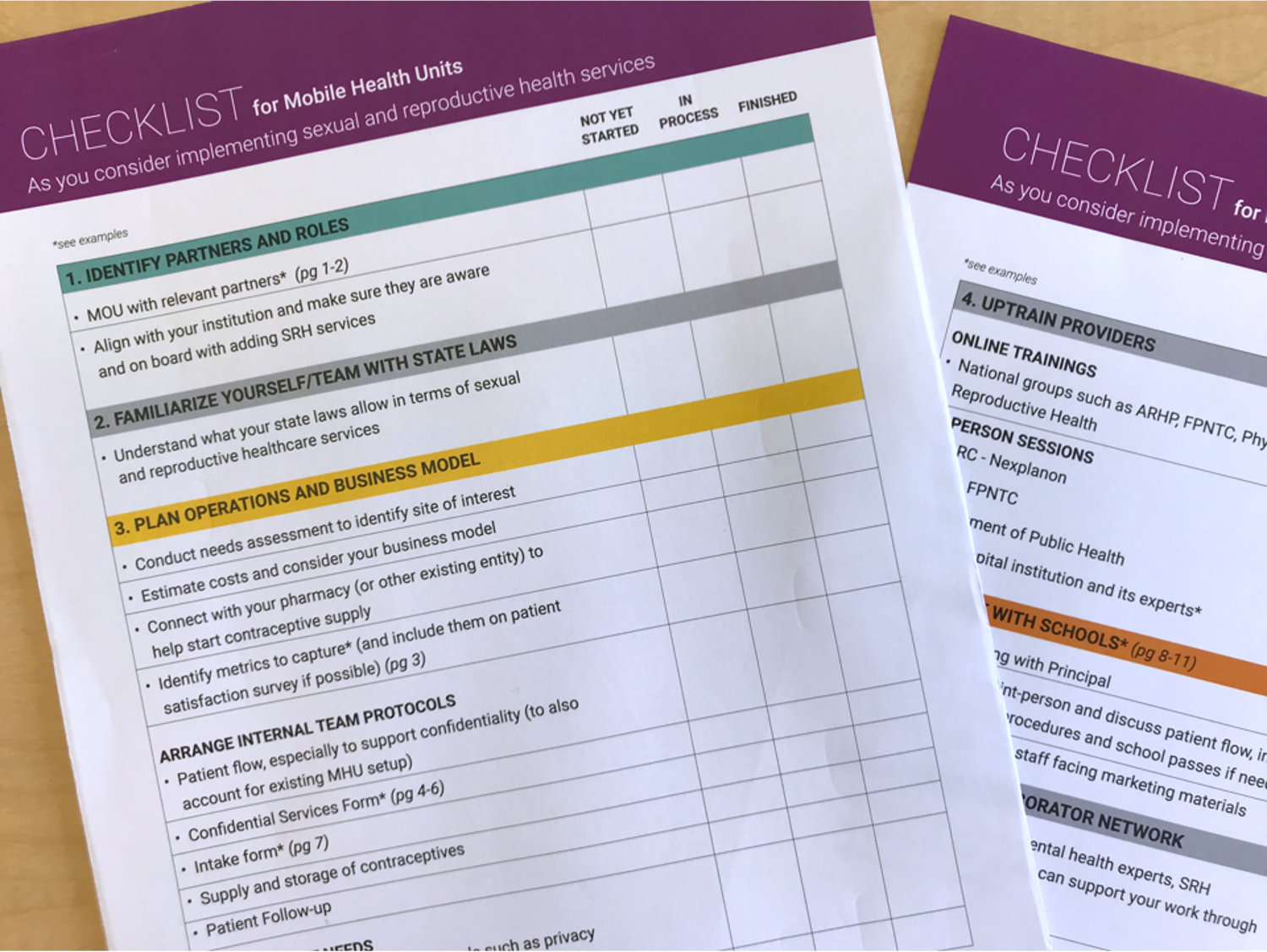
From this work, we packaged the service blueprint as well as adolescent self-consent forms, and the visit summary forms as part of a Mobile Health Toolkit. These were presented and distributed at the Mobile Health Unit National Conference. Since then two other mobile health units in Philadelphia and Mississippi activated adolescent health services.
OUTPUTS
Service Blueprint
Standardized Visit Summary form (Quality improvement)
Standardized consent forms
Provider training materials