Building trust with autonomous vehicles
Project type: Experimental, Two day design-a-thon
My role: Designer, Researcher, Storyteller
Additional team members: 10 additional team members who served similar roles, and 2 facilitators
Timeline: 2 days
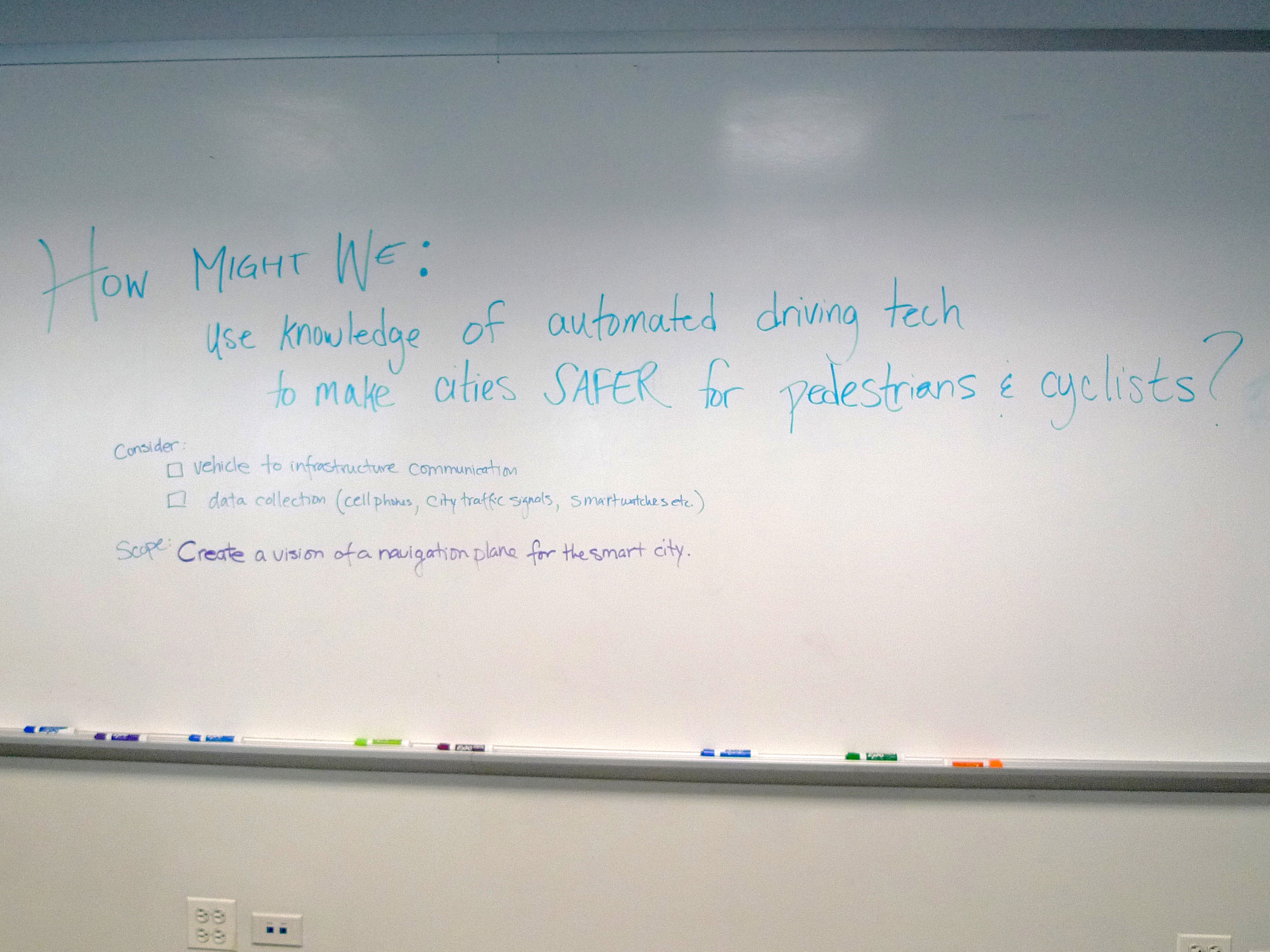
Our client HERE (formerly known as NAVTEQ), asked how they could leverage autonomous driving technology to make cities safer for pedestrians and cyclists.
There was already data to suggest that cities would be safer with autonomous vehicles, but HERE looked for how it could be incorporated into cities and utilized.
Divergent thinking at its peak
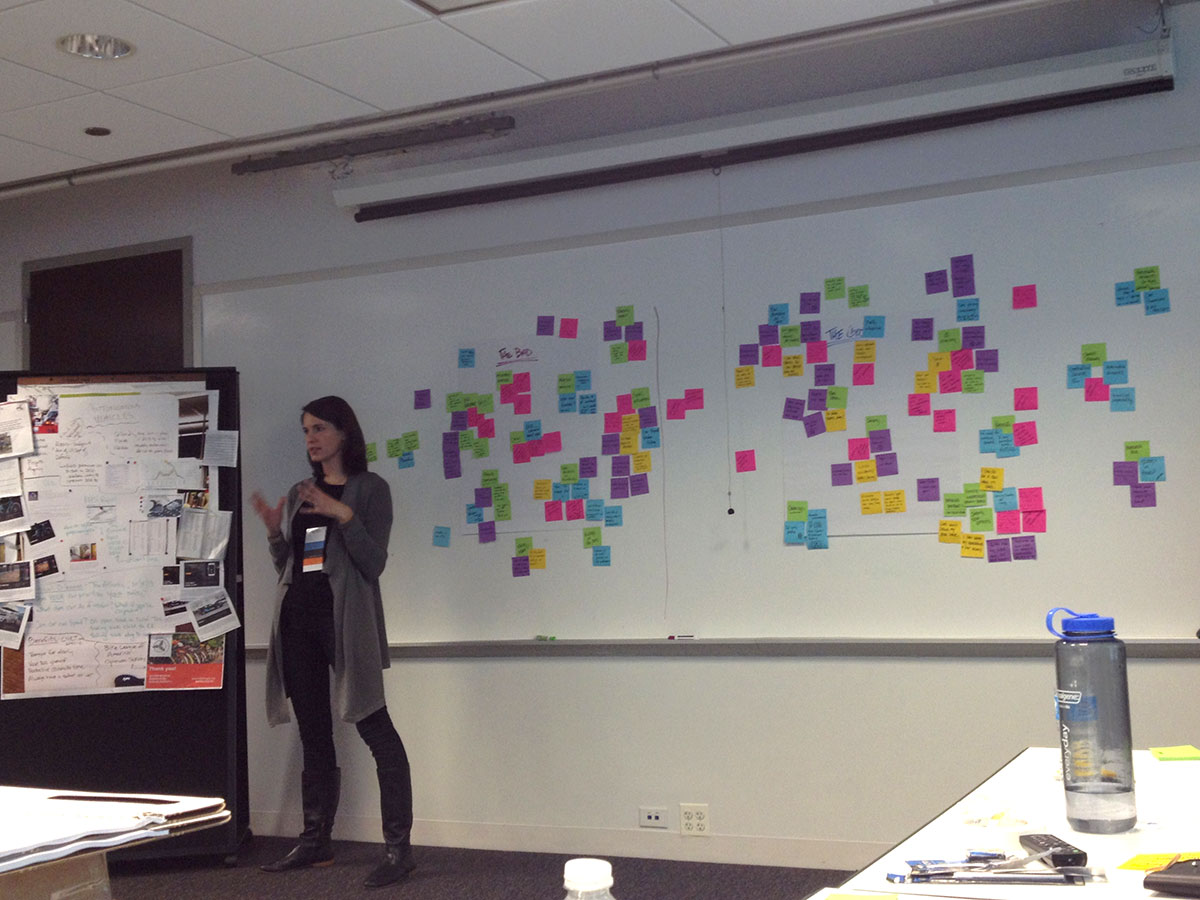
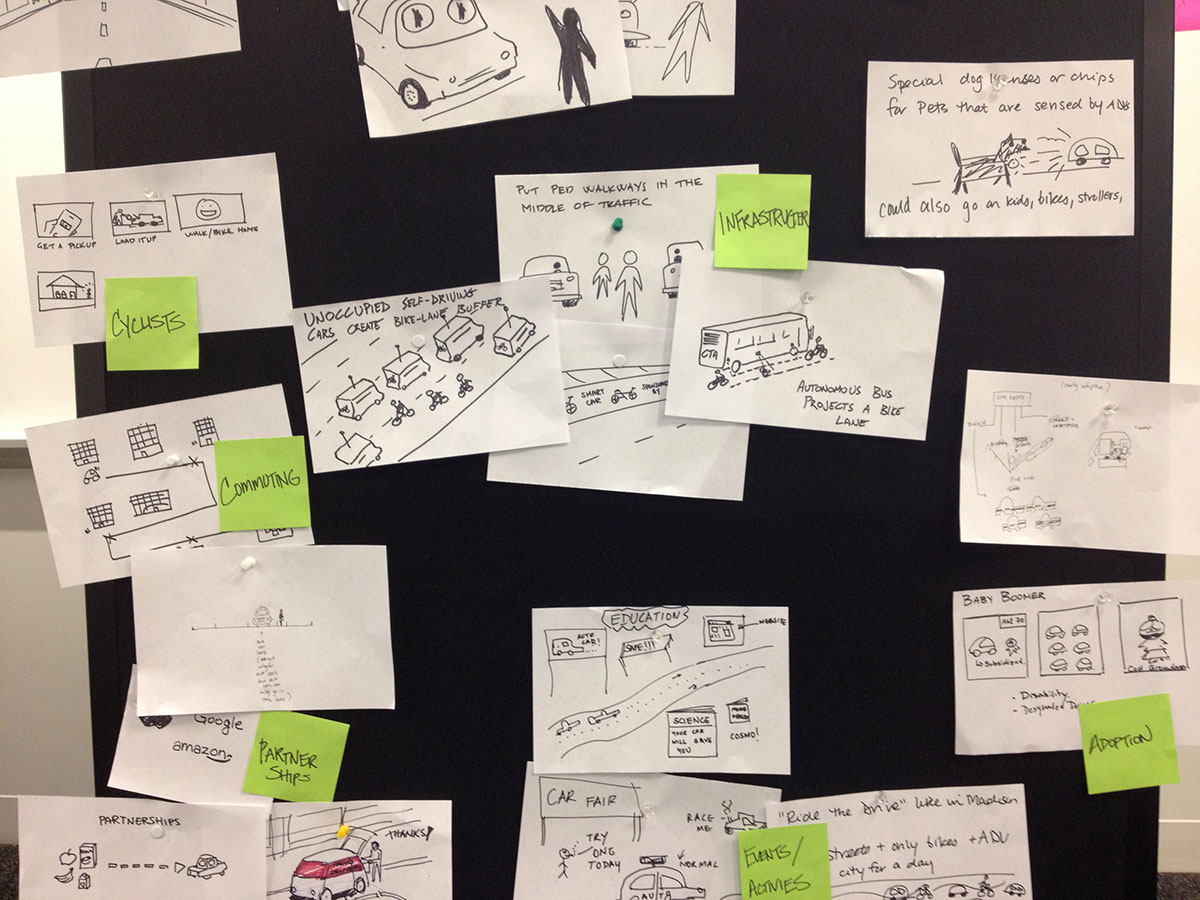
We engaged in several exercises to generate many wild, and grounded ideas for usage of autonomous vehicles. Using the very good/very bad uses framework, we covered topics from holding and selling parking spots to helping busy families take care of children and older adults as they move between activities and hospital.
Observations: Then we spent time outside the facility to observe a busy intersection in Chicago, where there were delivery folks on bikes, taxis, pedestrians, trucks, etc. These observations were discussed and we further generated ideas.
Reframing
As this project had to conceive the future, sometimes the team would question what would be realistic to consider what would be possible. This could quickly lead to an unproductive line of thinking and discussion of “what ifs”. Our client reminded us not to get weighed down by the particulars of technologies that would be ubiquitous ten years from now.
Moment of insight: We realized that safety is built upon 1) evidence of models and testing (which will exist) and 2) also trust — an assurance that your expectation will be fulfilled. In our discussions and background research, the majority of people did not trust autonomous vehicles. In fact, they didn’t know what to think of autonomous vehicles altogether.
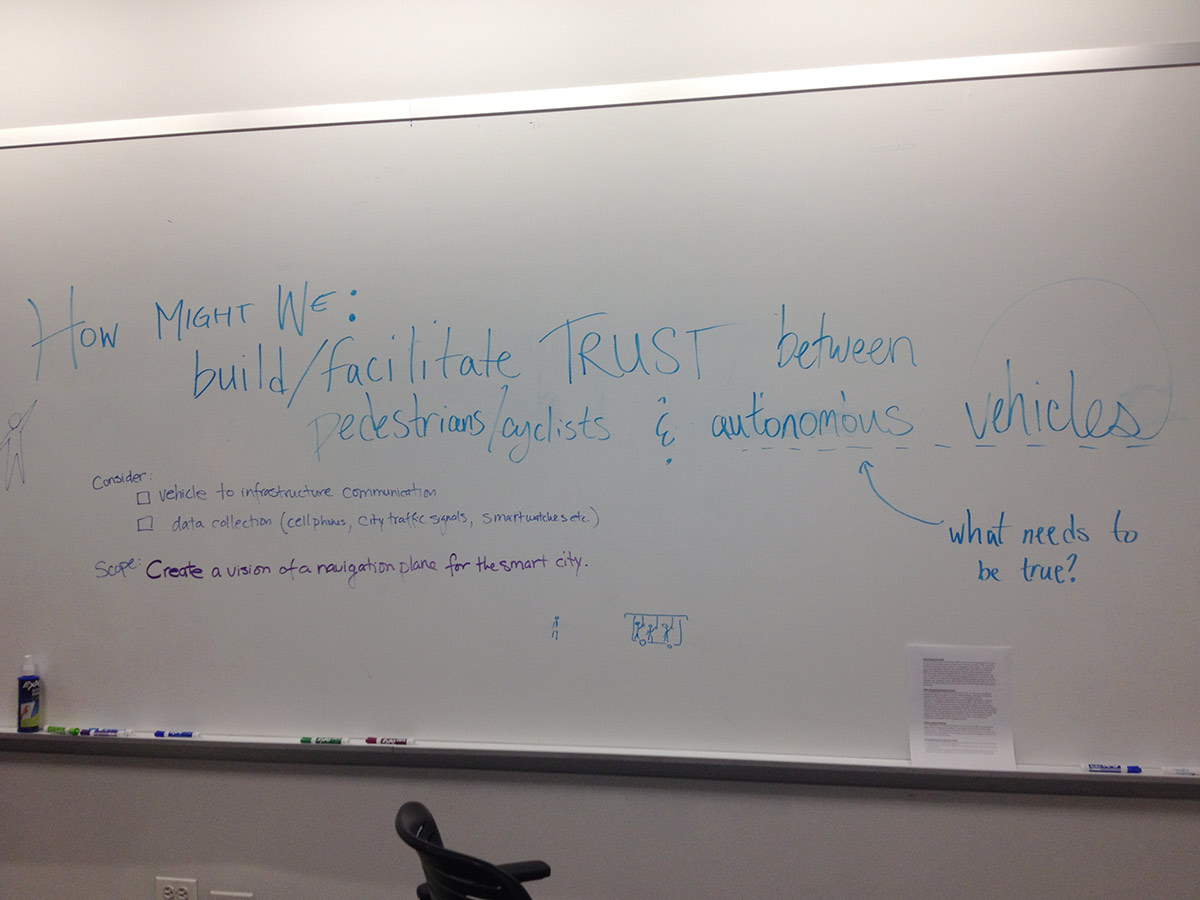
We also reframed our problem, to focus on trust rather than safety.
Storyboarding
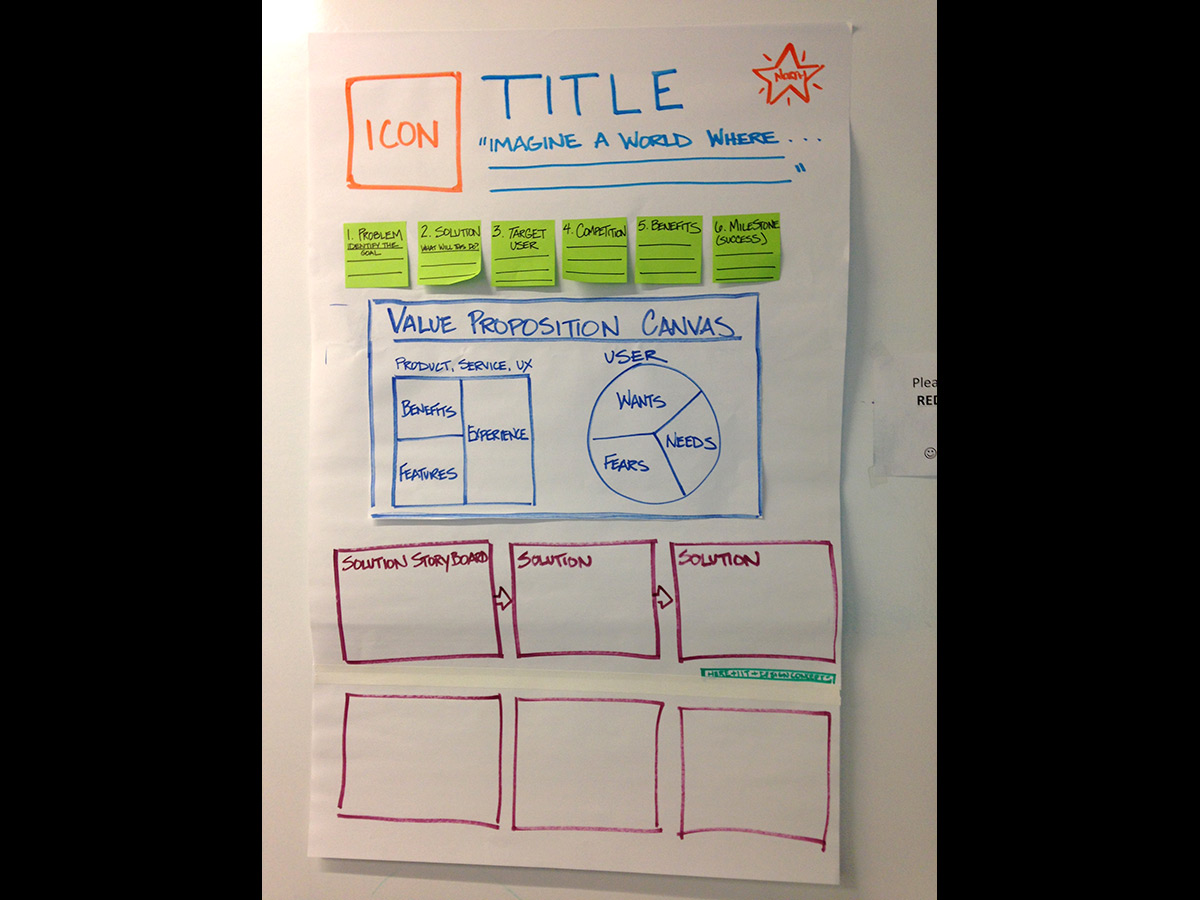
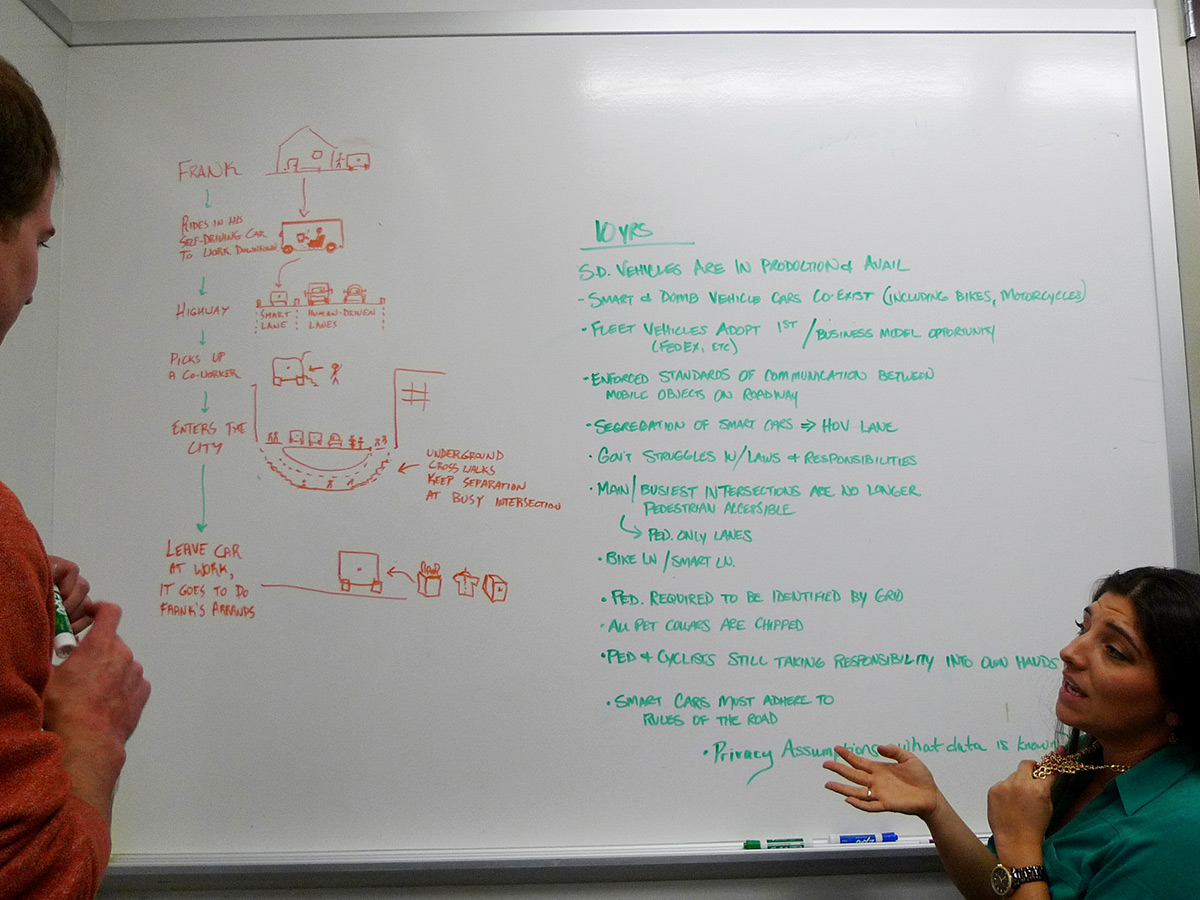
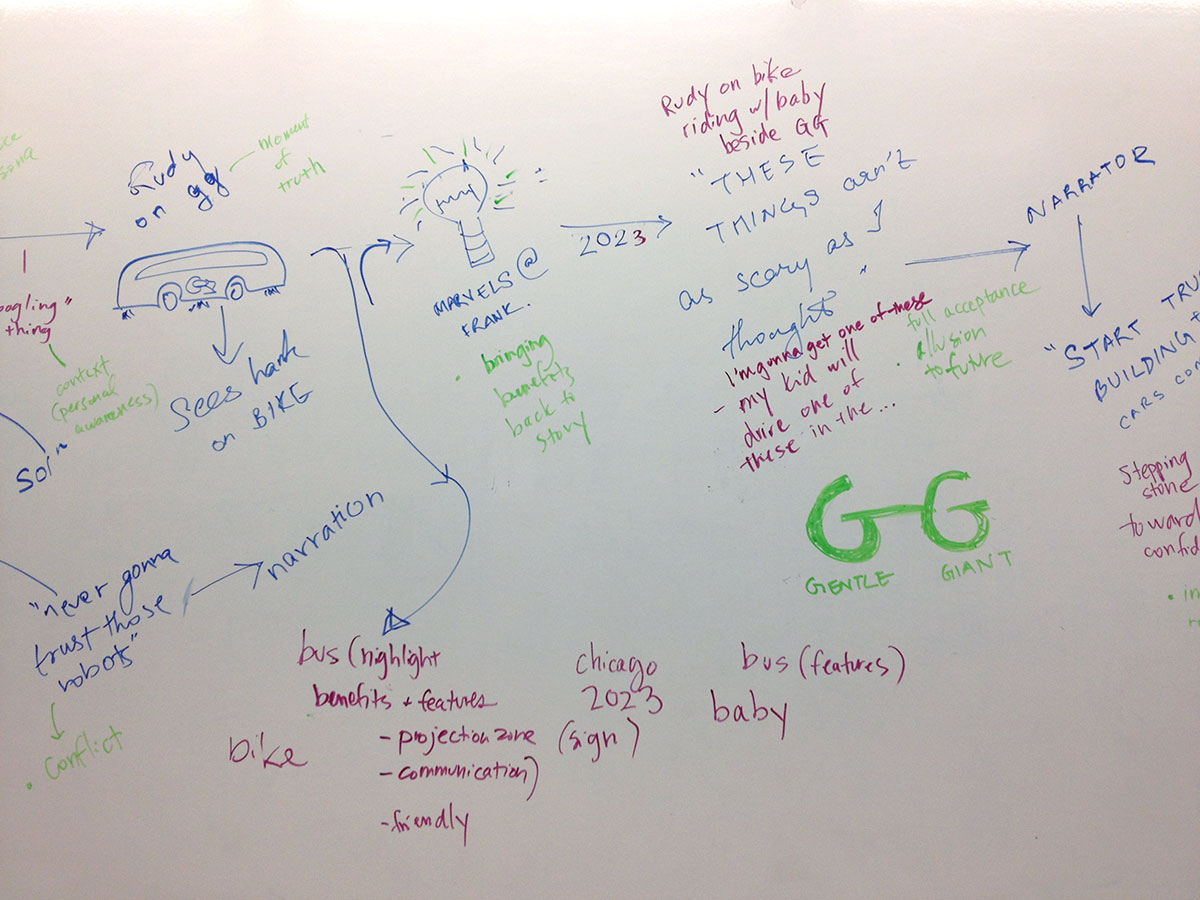
With this new reframe, and many ideas in hand, we split into groups and mapped out stories of what 5, 10, 15 years in the future might be with autonomous vehicles.
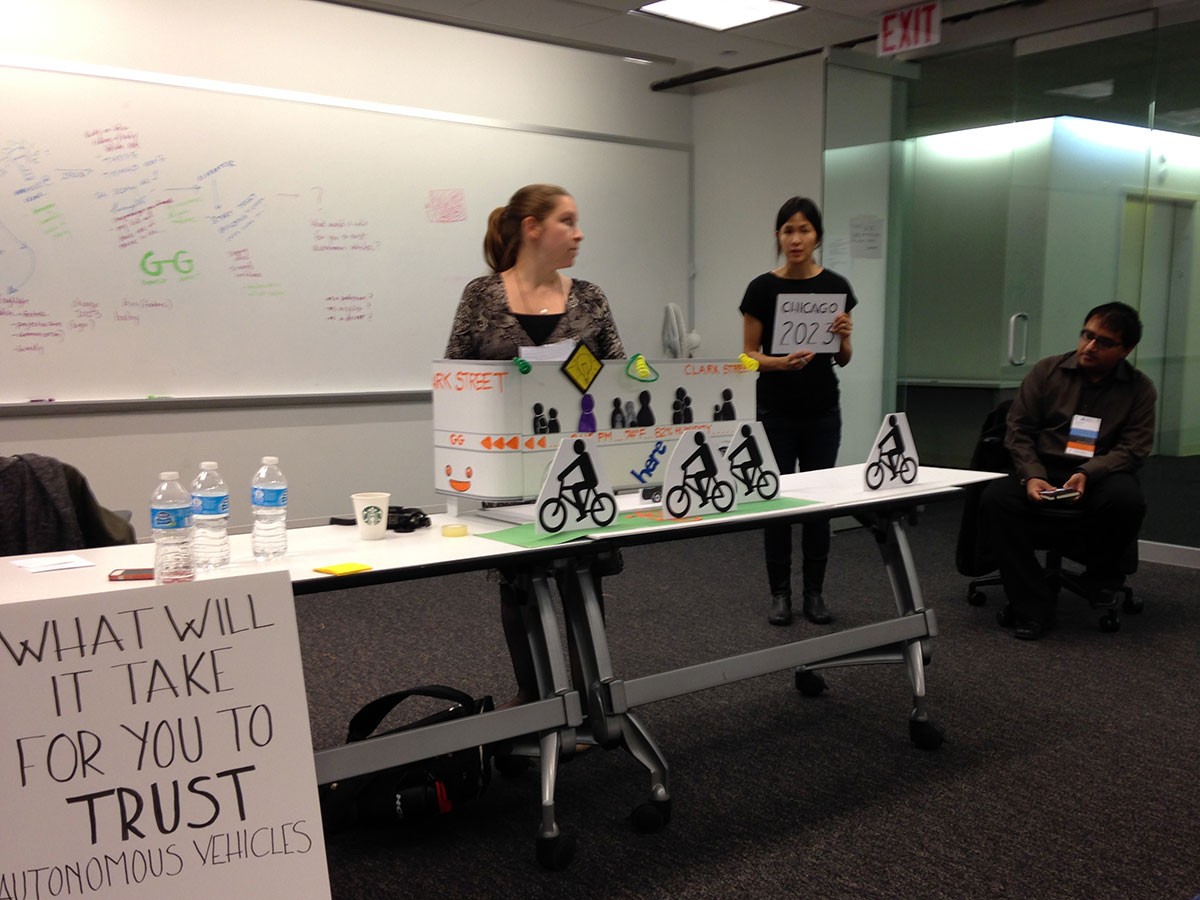
Our final solution was an autonomous bus (i.e. G.G. Gentle Giant), operated by the city for everyone to ride. The bus would offer a protected bike lane. The solution represented a slow introduction of an autonomous vehicle to establish public trust.
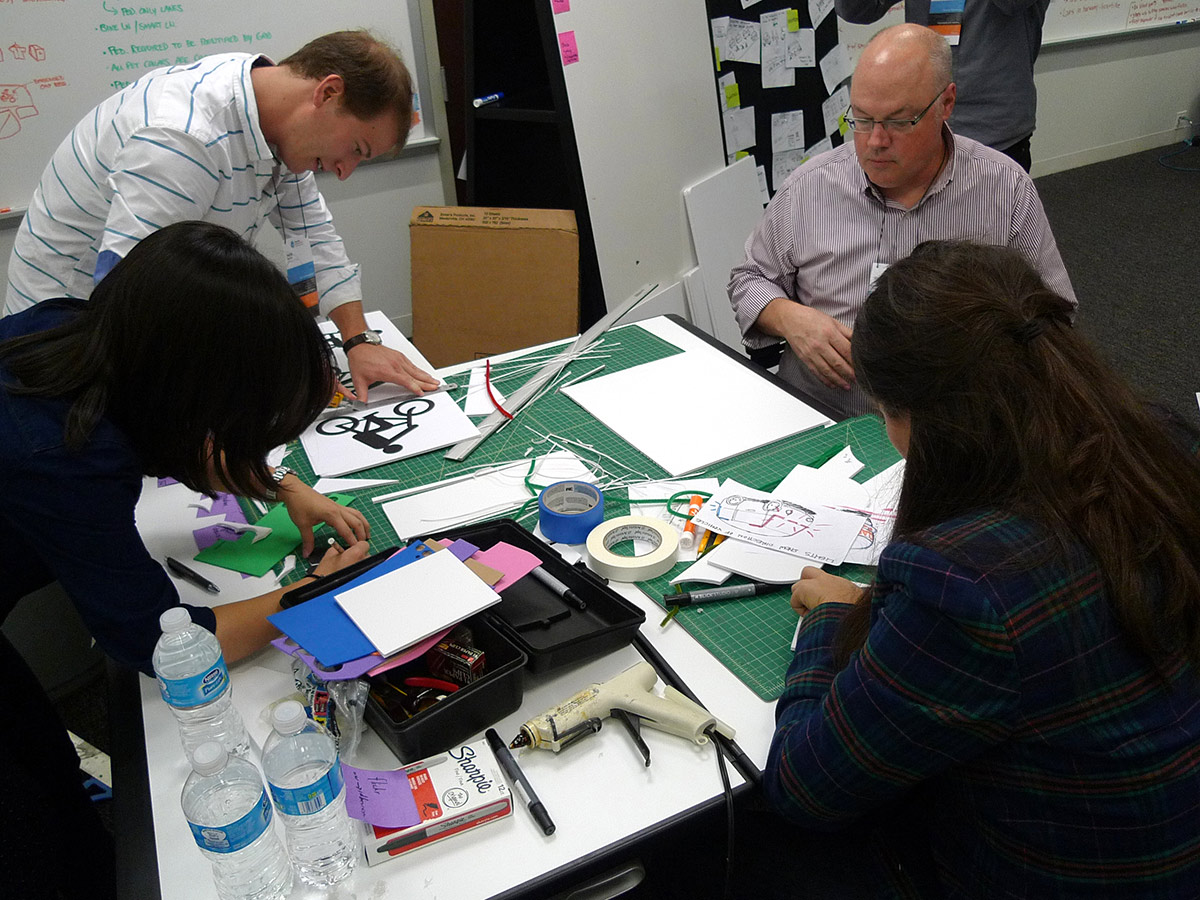
We presented our story through a play, while using physical models of the Gentle Giant bus and a cityscape at the final shareout.