
Easing new parents' transition back to work
Project type: Product definition
My role: Research and strategy lead for phase 1 of project, project manager, UX designer
Additional team members: 2 designers/researchers
Timeline: 10 weeks
Parents in America have enormous pressure to be successful in their careers as well as successful parents. The transition back to work after having a child is especially difficult in a country where parental leave is not guaranteed.
We looked to prototype a solution, for parents working in the information economy, that would ease their transition back to work.
Exploring problem space
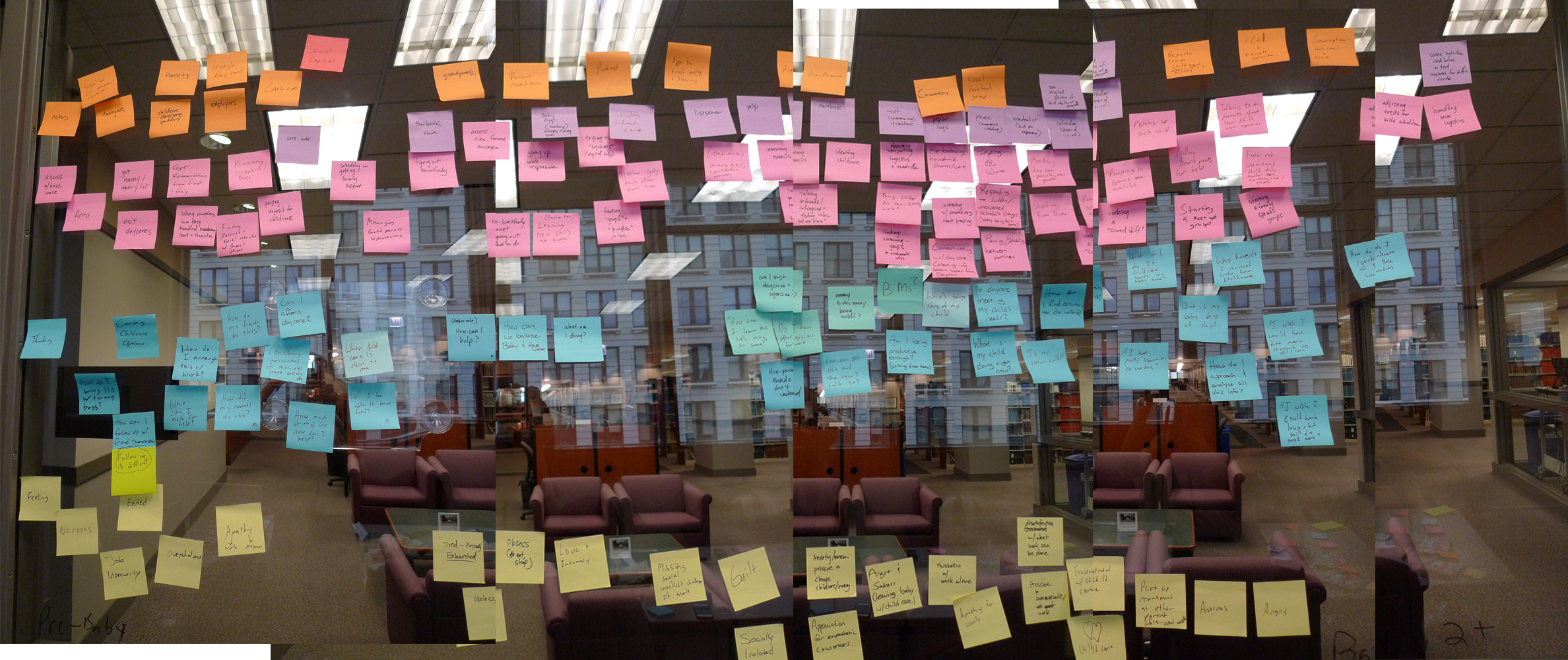
Exploring the problem space: To understand the transition back to work, we conducted 60 minute interviews with new and expecting parents. We interviewed 9 couples (in dyads) to understand how parents prepared for and navigated work-life balance with a newborn.
What we learned: While parents fulfill logistical needs through current childcare solutions, parents often experience an emotional gap. One parent we spoke with could barely bring herself to leave the daycare center while saying goodbye to her newborn.
How we applied learnings: There is an opportunity for a solution, that offers an emotional bridge, to relieve the anxiety associated with returning to the workforce. This led to our problem reframe: How can we build trust between childcare providers and parents?


Idea generation and testing
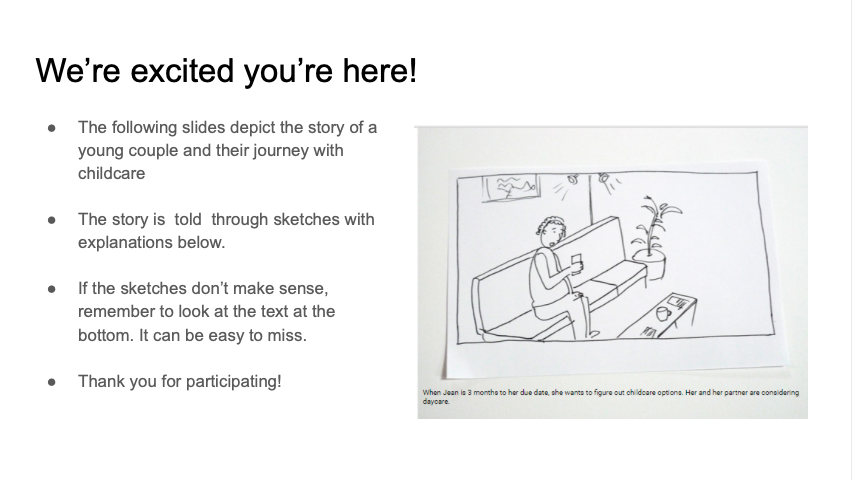
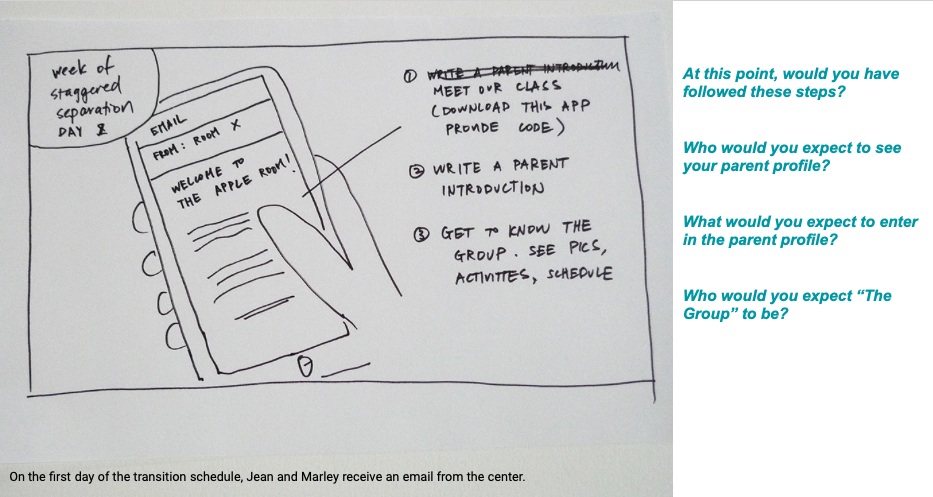
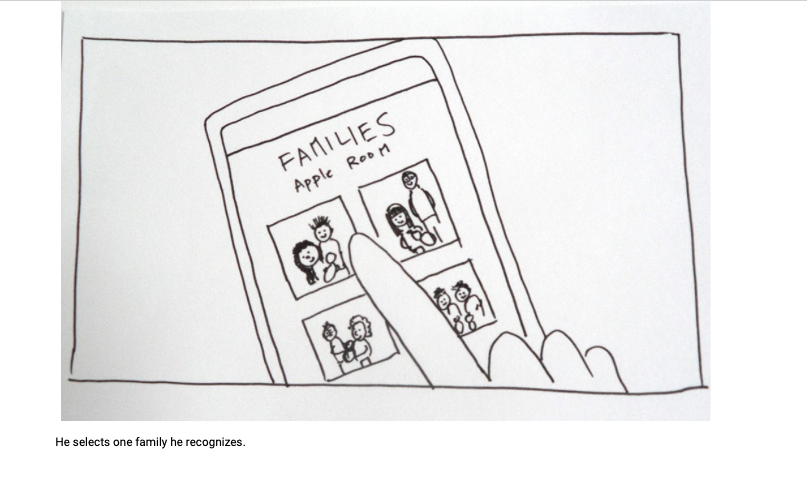
Approach to digital solution-ing: Based on the problem reframe, we crowdsourced solutions through “how might we prompts,” then placed several extreme and ideal solutions within a storyboard. With another set of parents, we conducted remote unmoderated testing of these concepts. Based on the constraints of this project, we limited ourselves to digitally focused solutions.
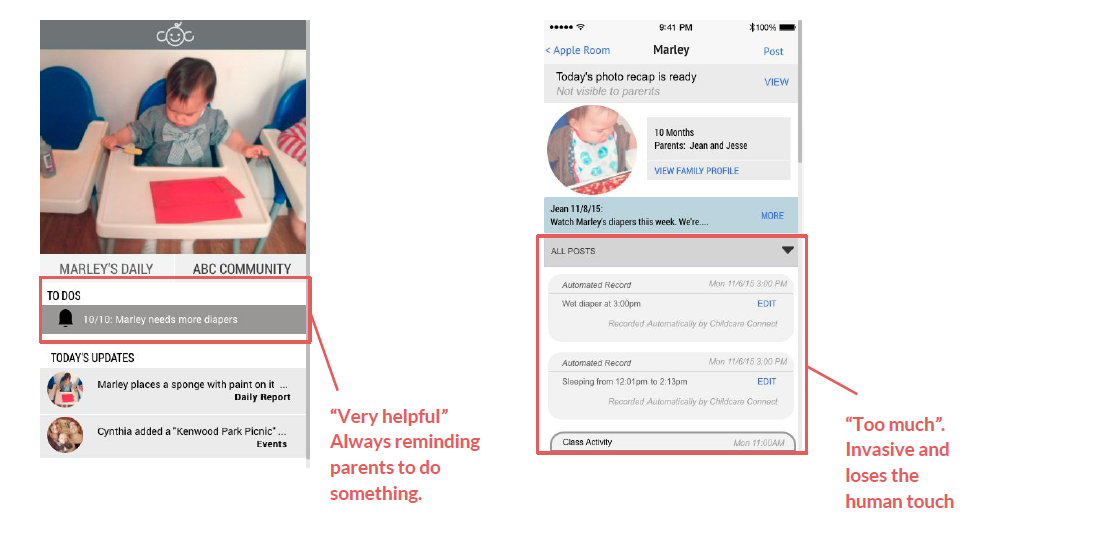
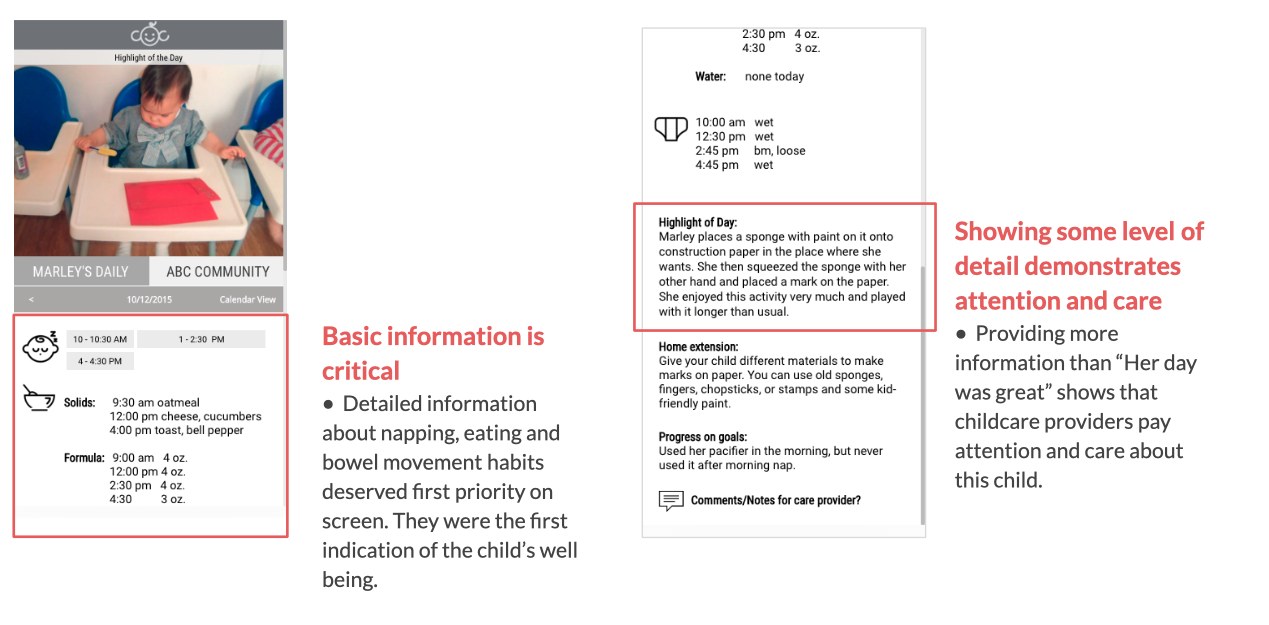
How we applied learnings: Parents value social connections with both teachers and other families. Digital tools should support and remind, not replace, face-to-face meetings. Community connection capabilities should be emphasized — something we questioned before. We also learned that parents need details about their child’s habits in order to be emotionally invested in the tool.
Accounting for the childcare provider perspective
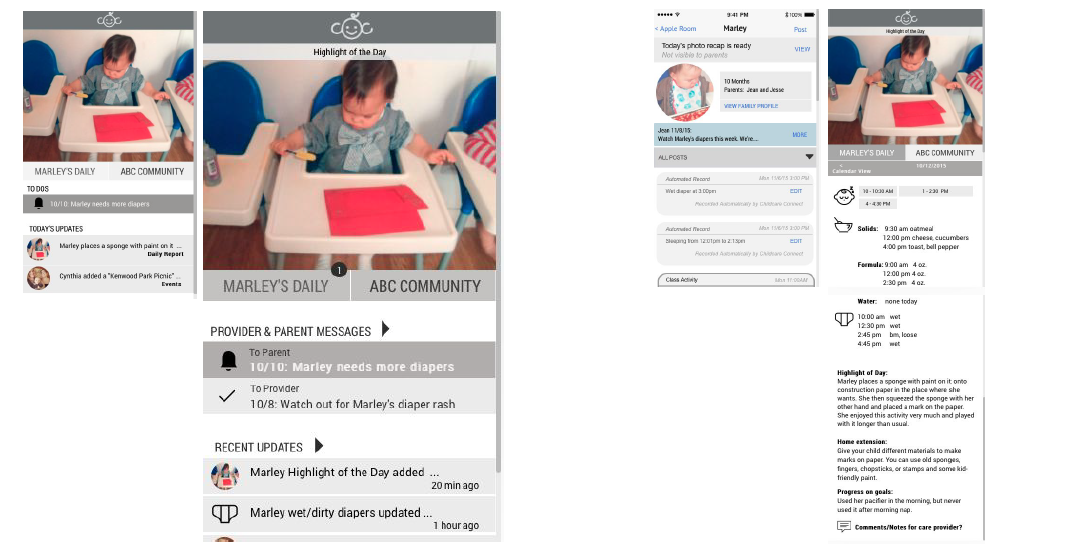
Narrowing our designs: While there were many potential touchpoints to encourage parental trust in childcare providers, our solution focused on screens where childcare providers or parents would be sharing and digesting information. We created clickable wireframes for “Childcare Connect,” and asked 6 former and current childcare providers to evaluate features in the app while also asking more “why” a solution would or would not work.
What we learned: Childcare providers’ are concerned about their workflow and how they can provide valuable information to parents within that.
How we applied learnings: We recognized the need for solutions on the childcare providers’ side. While this was out-of-scope for this project, we noted this as a next step and a current risk in the presentation of our solution.
Outcomes
We learned as designers the limits of what digital tools could do in providing trust, and where to leverage technology. While details of a child’s day fulfilled parents more than standard reports, childcare providers doubted the ability to provide such reporting without greater technology enhancements in their centers.
We also realized how valuable parent networks are in creating trust with a childcare provider. Future apps related to connecting to parents, should leverage these supportive networks. They can use them to spur conversations as a community, rather than relying on 1:1 interactions between childcare providers and parents.
OUTPUTS
An experience model demonstrated the emotional vs transactional fulfillment of childcare options as parents transition back to work. We focused on filling that emotional gap.
A clickable prototype highlighted details of a child’s activities as well as community connections.