
Aligning customer feedback across an enterprise
Project type:Research and journey architecture
My role: Team Lead, Lead researcher
Additional team members: Directors and Analysts from Digital Portfolio, Customer experience, and Voice of the Customer
Timeline: 10 weeks
While working with many different segments of data at a healthcare enterprise from different departments, I noticed that they were largely not being acted on, and also the data did not speak to each other.
I formed a team to address this issue and largely followed John Kotter’s 8 steps for change. The included Directors and Analysts from Digital Portfolio, Customer experience, and Voice of the Customer.
Understanding the problem
Feedback coming from platforms was too broad, and also reported on different categories of issues. We had feedback from customer service, Foresee surveys, OpinionLab and usability studies – all of which were owned by separate groups. We recognized that there were data patterns across the platforms, but that they were not consolidated. We also recognized that each of us separately have already advocated for the same opportunity.
As the first full-time UX researcher dedicated to member-facing digital products, I understood both their cadence and workflows, as well as feedback platforms. I crafted a problem statement and socialized with the team and relevant stakeholders over two weeks.
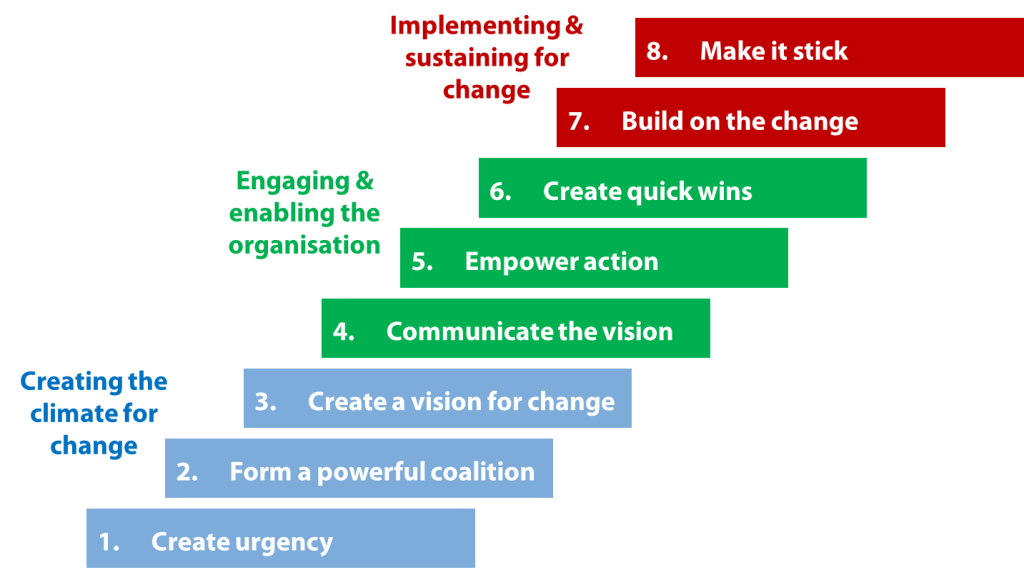
John Kotter’s 8 stages of change
Aligning data
The member journey was a natural fit for how to structure and align the data coming from these separate departments, especially because digital was already planning to use this structure to organize teams. For the purposes of aligning data, they were vetted with the following considerations:
- Which healthcare insurance related tasks were relevant to the digital member journey?
- What was the current classification of tasks in Foresee and OpinionLab data?
- What are insurance members looking to accomplish?
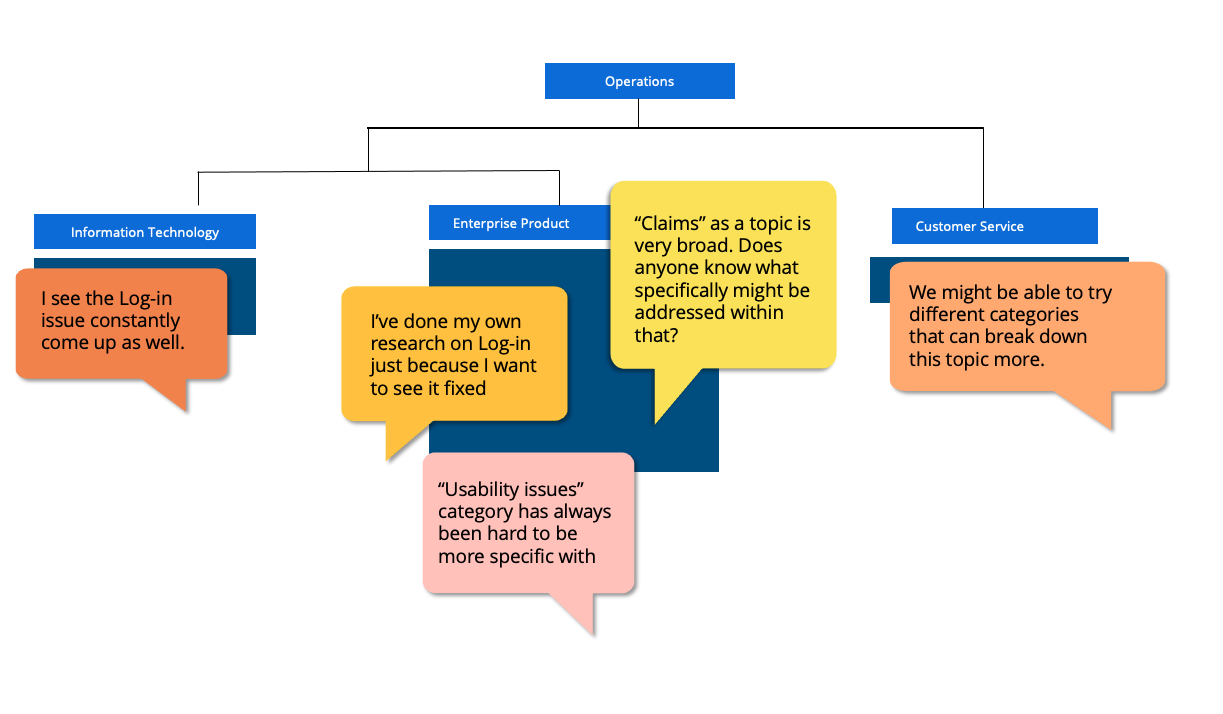
Refining the member journey architecture
As we entered the final stages of finessing the member journey architecture that would be used to tag and identify data from a variety fo sources, we completed the following tasks:
- Worked with Voice of the Customer team to create a member journey analysis that would breakdown customer call issues by micro-journeys and user actions.
- Quickly tested the revised journey architecture with customers using a card sort.
- Editing the Foresee “primary reason” question to be based on the micro-journeys and user actions.
- Creating alternate taxonomy for categorizing opinionlab data

Implemention and socializing findings
Those responsible for the feedback platforms logged in the top customer pain points or NPS opportunities for their individual platform. The data consolidated in one spreadsheet view demonstrates which part of the member journey needs attention.
Additionally, by aligning Foresee questions to the member journey, and thus, the digital teams, digital teams now had their own dashboards to view the status and member feedback of their product – something that was inaccessible to them before.
We held a monthly forum where we shared these top opportunities, and also posted news about it on Yammer, sent a survey for feedback and had following up 1:1 conversations for how to improve it.
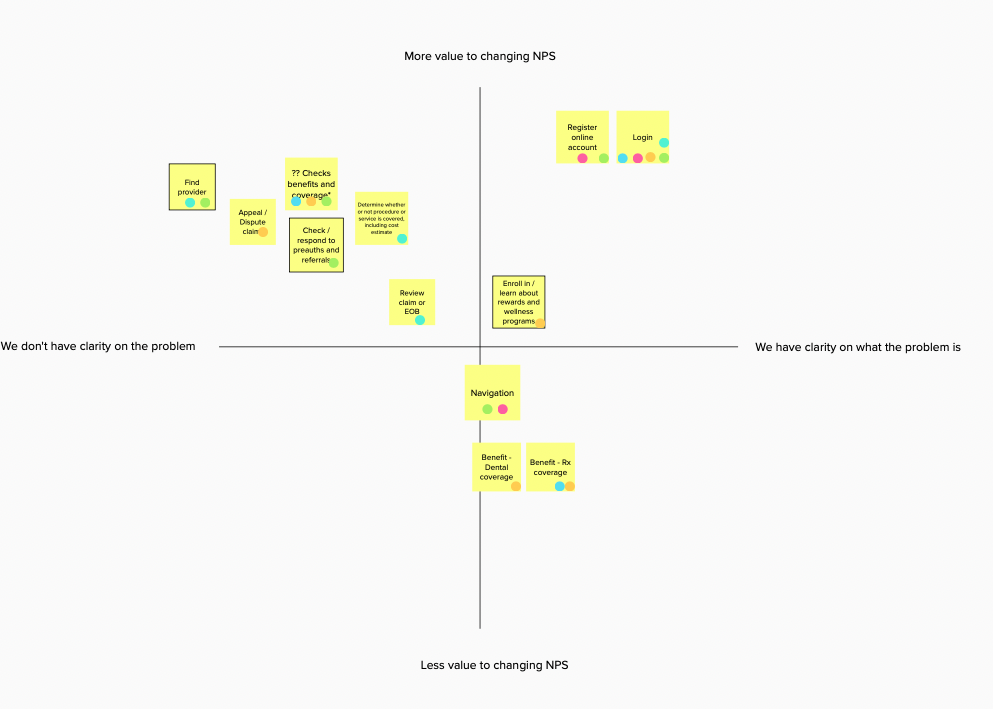
Outcomes
This initiative engaged more product owners in user feedback than ever before at the company, and aligned VoC, digital product and customer experience teams on user outcomes.
Product managers and design teams also now had touchpoint measurements based on user feedback.
Senior executives asked to replicate the model to employers and to providers, who are the healthcare company’s other primary customers.
OUTPUTS
Member digital journey architecture
Dashboards showed user feedback by product teams
Monthly reports